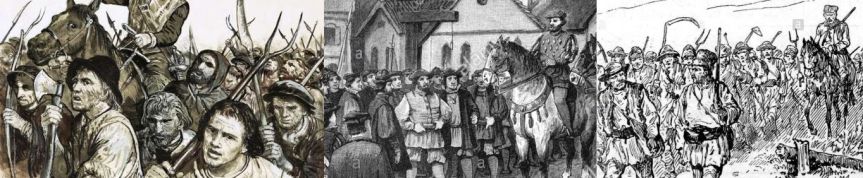
Fox News is like Pravda of old, the famous USSR propaganda channel. An old joke was this: An American & Soviet had a challenge, which the American won by a mile. The Pravda article later reported "In today's race our valiant Soviet entrant finished in 2nd place while the pitiful American finally arrived 2nd to … Continue reading Presidential Debate, Fox News, and Scythes
Trump Parades: Cheering for your Hangman
Delicious! The delusions of those clawing, scratching, cheering; thinking they will rub elbows and share riches with the uber-wealthy. Laughing today at those they are told are below their rung. "Trump 2020" they cheer! Recall the child's game "ten little, nine little, eight little Indians..." or "I lit a match and it went OUT!" or … Continue reading Trump Parades: Cheering for your Hangman
Diet#3: 16 Rounds & Weetabix
Another long diet/exercise story. I've maxed myself out at my morning walk, finishing 12 stairs (plus 4 warm-up/cool down). This is from my original, unimaginable, goal of FIVE. Those 16 cycles took 1:02. Adding any more loops seems crazy. I will now fix this length at 16, and work on lowering the time; an hour … Continue reading Diet#3: 16 Rounds & Weetabix
Diet#2: Bluetooth Headband
In the last couple weeks I have shot from five sets of stairs (my orig goal) to six, seven, and today EIGHT. I wanted to share my tech. Of course, it took me several passes to figure out how. I bought a Bluetooth headband to replace my earbuds. First my first two months I just … Continue reading Diet#2: Bluetooth Headband
Faith in Your Kids
Since Mothers Day, I've have many nostalgic chats with friends about moms; recalling my mom's life, my childhood, her later years and passing two decades ago. I was struck by an interesting thought. Her generation lived through "The Great Depression" when young, but also experienced late in life our modern technological boom. While technology changed … Continue reading Faith in Your Kids
US-19 Pedestrian Safety – Now?
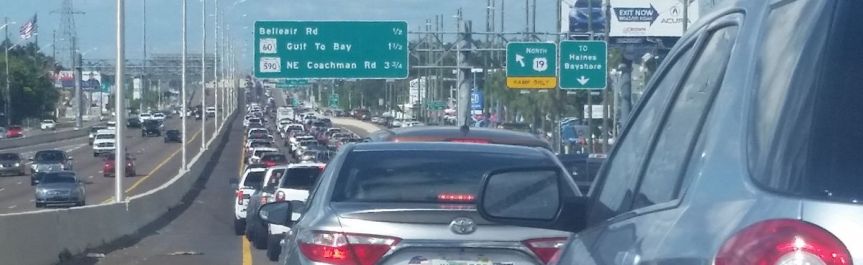
Today I attended a FDOT sponsored focus group for a new US-19 “frontage road safety plan”. *sigh* FDOT is now addressing our shoehorned freeway from its south at the Ulmerton/Roosevelt fork up to Countryside mall on the north; where it returns to a 9-lane arterial, the next FDOT mega-project. Yes, absolutely, I was honored to … Continue reading US-19 Pedestrian Safety – Now?
CNU/DC – The Wharf Tour
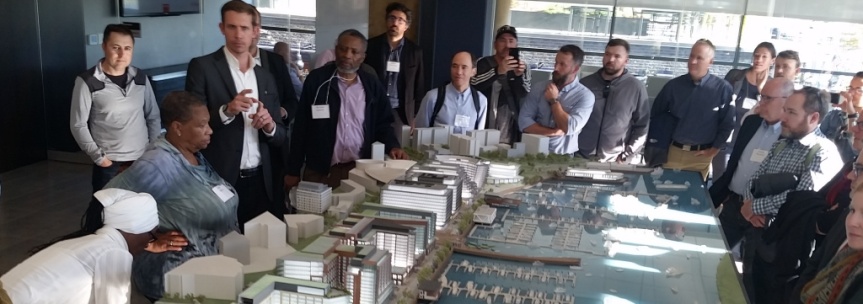
I'm in Washington for the CNU Transit Workshop this week. Every CNU event includes a local tour, to showcase some local site. This time we toured “The Wharf” development just south of L’Enfant Plaza; a few blocks east of Jefferson Mem, south of the Smithsonian, on the banks of the Potomac. It was guided by the … Continue reading CNU/DC – The Wharf Tour
Hallmark Cards & Bucket Lists
My 60th Birthday was yesterday, and I was caught off guard by my pensive mood of somber self-reflection. I make no secret that during a major life event I like to pause with my hand on the doorknob, take a sentimental look back and a thoughtful look forward, think about the differences … before I … Continue reading Hallmark Cards & Bucket Lists
US-19, Marchetti’s Law, Jevon’s Paradox

I left the CNU conference with a head full of information, reams of notes, and one incredible insight to the mess here in North Pinellas. Everybody stuck in a traffic jam on US-19 or McMullen Booth wants to “Add a lane”. Most of us know this never works, due to “Induced demand”. But I learned … Continue reading US-19, Marchetti’s Law, Jevon’s Paradox
CNU Keynote: Lifetimes & Changes

The keynote address at CNU in Louisville, like most national conferences, stopped to honor several stellar members that had passed in the last year. Strangers to me (as a newbie) they were obviously well known, well loved, and described as people that had spent their lives in the calling of Urban Planning, Property Development, Alternative … Continue reading CNU Keynote: Lifetimes & Changes
 Your Daily Duncan